When choosing a battery for a solar power system, most people focus on its capacity, such as 5kWh, 10kWh or 15kWh. However, battery capacity is not the only specification that matters. Another important term you should understand is Depth of Discharge (DoD).
Understanding battery Depth of Discharge can help you choose the right battery, estimate how much energy is actually available for use and avoid operating the battery in a way that could shorten its lifespan.
What Is Battery Depth of Discharge?
Depth of Discharge (DoD) refers to the percentage of a battery’s stored energy that has been used.
For example, if a battery is discharged by 50%, its Depth of Discharge is 50%. This means approximately half of its available capacity has been used, while the remaining half is still stored in the battery.
DoD is closely related to another term called State of Charge (SoC).
State of Charge describes how much energy remains in the battery, while Depth of Discharge describes how much has been used.
For example:
– 100% SoC = 0% DoD
– 80% SoC = 20% DoD
– 50% SoC = 50% DoD
– 20% SoC = 80% DoD
Why Is Depth of Discharge Important?
Depth of Discharge is important because repeatedly draining a battery deeply can affect its lifespan.
Most rechargeable batteries have a recommended DoD specified by the manufacturer. Operating within this recommendation can help maintain battery performance and maximize its useful life.
For example, a battery manufacturer may recommend a maximum DoD of 80%. This means you can use approximately 80% of the battery’s rated capacity before recharging it.
The remaining 20% acts as a reserve rather than being routinely used.
How Does DoD Affect Usable Battery Capacity?
A battery’s advertised capacity does not necessarily represent the amount of energy you should routinely use.
Consider a 10kWh battery with a recommended 80% DoD.
The usable energy based on that DoD would be:
10kWh × 80% = 8kWh
Therefore, approximately 8kWh would be available for regular use before reaching the manufacturer’s recommended discharge limit.
This calculation is useful when determining how much battery storage your home actually needs.
Depth of Discharge and Battery Lifespan
There is generally a relationship between DoD and battery cycle life.
A battery that is repeatedly discharged very deeply may experience more stress than one that operates within a shallower discharge range. However, the exact relationship depends heavily on battery chemistry, design, temperature, charging conditions and manufacturer specifications.
For this reason, two batteries with the same capacity may have very different expected lifespans.
Modern lithium batteries, particularly LiFePO4 (lithium iron phosphate) batteries, are widely used in solar systems because they can offer a high cycle life and substantial usable capacity.
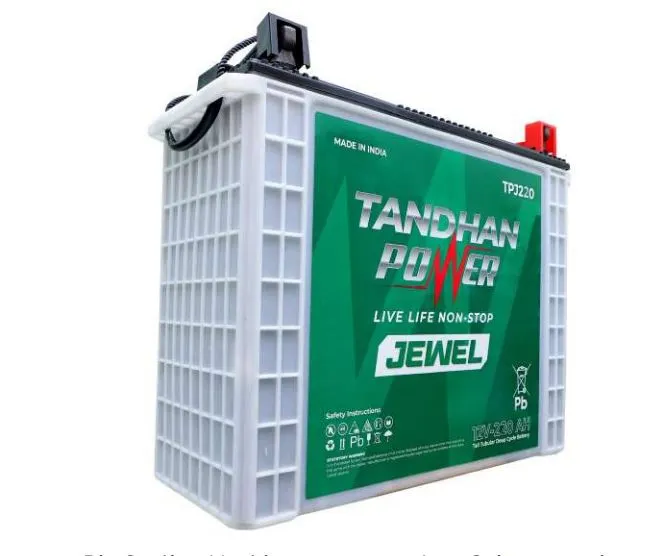
Lead-acid batteries generally require more careful management of discharge levels because deep discharges can significantly affect their service life.
DoD vs Battery Capacity: What’s the Difference?
These two terms are often confused.
Battery capacity tells you how much energy the battery can store, usually measured in kWh.
Depth of Discharge tells you what percentage of that stored energy has been used.
For example, imagine you have two batteries:
– Battery A: 5kWh capacity, 80% DoD
– Battery B: 10kWh capacity, 50% DoD
Battery A has approximately 4kWh of usable energy based on the stated DoD.
Battery B has approximately 5kWh of usable energy.
This shows why looking at capacity alone can be misleading when comparing solar batteries.
What Is 100% Depth of Discharge?
A 100% DoD means that essentially all of the battery’s rated capacity has been discharged.
However, this does not necessarily mean that every battery should routinely be discharged to 100%.
Some modern batteries have sophisticated battery management systems (BMS) that protect the cells from unsafe operating conditions. The manufacturer’s specifications should always be followed when determining the appropriate operating range.
How Does DoD Affect Solar System Sizing?
Depth of Discharge is particularly important when sizing a solar battery.
Suppose your home requires approximately 8kWh of energy overnight.
If you choose a battery with a usable DoD of 80%, you would need more than 8kWh of nominal battery capacity to provide that amount of usable energy.
A simplified calculation would be:
Required battery capacity = Energy required ÷ DoD
Therefore:
8kWh ÷ 0.80 = 10kWh
You would need approximately a 10kWh battery based on this simplified calculation, before accounting for inverter losses and other system factors.
Does Temperature Affect Battery Performance?
Yes. Battery performance can be affected by temperature.
Excessive heat can accelerate battery degradation, while extremely low temperatures can affect charging and discharging performance depending on the battery chemistry.
This is particularly relevant when installing solar batteries in hot climates such as Nigeria.
Proper ventilation, appropriate installation and adherence to the manufacturer’s operating temperature requirements are important for maintaining battery performance.
How Can You Maximize Your Battery’s Lifespan?
To get the best performance from a solar battery:
– Follow the manufacturer’s recommended DoD.
– Avoid unnecessary deep discharges.
– Use a compatible inverter and charger.
– Keep the battery within its recommended temperature range.
– Avoid overloading the system.
– Ensure the battery’s BMS and protection features are functioning correctly.
– Have the system professionally installed and periodically inspected.
For lithium batteries, avoid making assumptions based solely on the battery’s advertised capacity. Always check the manufacturer’s specifications for recommended operating limits.
Battery Depth of Discharge (DoD) is the percentage of a battery’s energy capacity that has been used. It is an important specification when selecting and sizing a solar battery because it helps determine how much energy can actually be used and how the battery should be operated.
For example, an 80% DoD on a 10kWh battery represents approximately 8kWh of usable energy under the stated conditions.
When purchasing a solar battery, don’t look at capacity alone. Consider its recommended DoD, cycle life, battery chemistry, warranty, operating temperature and compatibility with your inverter.
Choosing the right battery and operating it within the manufacturer’s recommended limits can help you get reliable energy storage and better long-term value from your solar power system.