Nigeria’s power situation often leaves homes and businesses grappling with frequent outages. Inverter batteries have become essential in providing a reliable backup power solution. Whether you’re running a small household or a large business, the right inverter battery ensures that your operations remain uninterrupted during power cuts.
This article will guide you through the process of selecting the best inverter battery, considering factors like capacity, lifespan, and compatibility, as well as providing maintenance tips to extend battery life.
Understanding Inverter Batteries
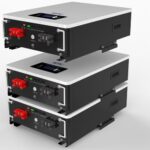
An inverter battery is an energy storage device that works in conjunction with an inverter to supply power during outages. When the main power supply fails, the inverter converts the DC (direct current) stored in the battery into AC (alternating current), which is then used to power your electrical appliances. The battery is recharged when the power supply is restored, ensuring it’s ready for the next outage.
Do you have to wait for the power to come back on when it goes out? A power inverter can assist you in overcoming the difficulties you face whenever there is a power outage. Whether you need an inverter for your home or office, you can choose from a variety of brands and models based on your budget. It is our delight to provide you with some guide on how to choose the best inverter sand batteries for your power needs.
What is an inverter?
Inverters are devices that convert direct currents (DC) to alternating currents (AC) to provide an uninterrupted electric supply.
Every home or office has unique power requirements. So, before purchasing an inverter, you must first determine your power requirements.
Understanding your power need
The total amount of electricity required to run your appliances is referred to as the power needed. If you have multiple units of the same appliance (for example, three fans), multiply the power rating by the number of unit.
Inverter battery capacity
Check that the capacity of your inverter batteries matches the capacity of your inverter. A battery’s capacity is the amount of electricity it can store. And an inverter’s capacity is the amount of electricity it can serve at one time.
Different Type of Lead-Acid Battery:
SMF/VRLA Battery
Tubular Plate Battery
Flat Plate Battery
Selecting the ideal battery
You can calculate the battery capacity in Ampere hours by adding the backup time for all of your appliances. A simple calculation can be used to determine the best battery for your needs.
Battery capacity= Power needed in Watts *Backup time (In hours) / Battery Voltage (Taken as 12V)
Using this formula, a 130 Ah battery can power three fans, three tube lights, one CFL, and a television for three hours.
Determining the VA rating of the inverter that you need
The capacity of an inverter, measured in Volt Amperes, is directly proportional to the load that it is designed to support. Divide the total load to be supported by the power factor to determine the inverter’s capacity. This is a measurement of the efficiency lost during the conversion of DC to AC. When you buy an inverter, the product description will include the inverter capacity value.
Choosing between a Sine wave inverter and a Square wave inverter
Depending on how your AC looks, there are two types of AC inverters: Sine wave and Square wave. Although the price of a sinewave inverter may appear to be high at first, due to its safety features, it is more reliable and lasts longer. There are also modified sine wave inverters in the market that are less expensive than standard inverters.