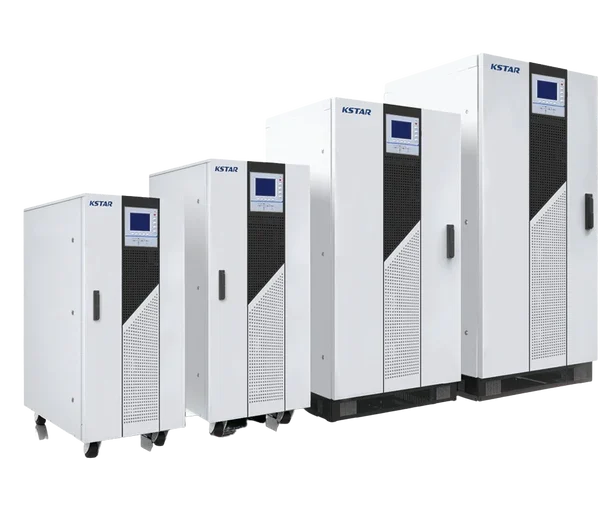
The battery is one of the most important parts of a UPS.
Without a healthy battery, the UPS cannot do its most important job when electricity fails.
For years, *lead-acid batteries*, particularly VRLA batteries, have been common in UPS systems. Now lithium-ion technology is becoming more common in newer UPS products.
So which one should you choose in 2026?
Let’s look at the practical differences.
*Lead-acid is proven and generally cheaper upfront.*
VRLA batteries have been widely used in UPS systems for years. They are familiar, relatively affordable and available in many systems.
The downside is battery ageing. Heat, frequent cycling and operating conditions can reduce battery life. Current UPS battery guidance continues to highlight temperature as an important factor in lead-acid battery performance.
Then you have lithium-ion.
Lithium-ion UPS systems typically cost more initially, but they can offer longer service life, lower weight and better energy density. Some current 2026 UPS products are being designed around lithium batteries, while manufacturers continue to expand lithium options for homes and businesses.
Imagine two households.
Household A experiences only occasional short outages. Their UPS mainly protects a desktop computer and router.
Household B experiences frequent outages and cycles the UPS battery much more regularly.
Household A may find a conventional lead-acid UPS perfectly practical, especially when the purchase budget matters.
Household B may benefit more from a lithium-based system if its higher upfront cost makes sense over the expected service life.
There is another issue many Nigerian buyers should think about: *heat*.
High ambient temperatures can shorten the life of lead-acid batteries. One current 2026 UPS battery guide notes that lead-acid service life can fall significantly as temperature rises above the typical reference point of 25°C.
That does not mean lithium is automatically the right choice for everyone.
You still need to consider the UPS manufacturer’s specifications, replacement cost, warranty, battery-management system, installation environment and expected usage.
Also remember that battery chemistry does not determine the UPS’s entire performance. You still need the right UPS capacity, topology, output waveform and protection features for your equipment.
The smartest purchase is the one that fits how you actually use your UPS.
If your priority is lower initial cost and proven technology, lead-acid remains relevant.
If you value longer battery life, lower weight and higher energy density, lithium-ion deserves serious consideration.
Looking for a reliable UPS for your home or office?
Visit www.energymall.ng to find the right power backup solution for you.